Water Damage Restoration Questions and Answers in Redmond
These short answers are grouped by stage, from the first minutes after a leak to the final moisture reading.
How these answers are grouped
Most water damage restoration questions in Redmond come up in a predictable order. First people ask what to do right now, then whether the water is safe, then how long drying takes and what happens to the walls and floors, and finally what to keep for the insurer.
Answers about valves, power and what can wait.
How to tell clean, gray and contaminated water apart.
Answers about the equipment, the noise and the readings.
Which materials stay and which are removed.
In the first minutes
Steps for right now are on the first hour steps page.
Is it ever safe to leave standing water until morning?
Only a small amount of clean water on tile or vinyl, with the source already shut off. Anything on carpet, wood or near walls keeps soaking in overnight, so it is worth starting sooner.
Where is the main water shutoff usually found?
Where the supply line comes into the house, most often in the garage, a utility closet, the basement or the crawl space access. Some homes also have a valve in a box near the street.
Does the main breaker need to go off?
Usually only the circuits for the wet rooms, and only if you can reach the panel from a dry spot. If the panel itself is wet, keep away from it.
Can I use my household vacuum on a wet floor?
No. Only a wet and dry shop vacuum is made for water. A household vacuum can short out and is a shock risk.
Is it worth calling for a small leak?
If the water reached carpet, a wall or a cabinet base, or ran for more than a short while, a moisture check is worth it. Small leaks are where hidden damp usually starts.
What should I do with wet electronics?
Leave them unplugged and do not switch them on to test them. Set them somewhere dry and let someone check them first.
Do I need to stay home while the equipment runs?
Not every hour, but someone should be able to let the technician in for checks and keep children and pets away from the machines.
What if the water is coming from the unit above mine?
Knock on their door or call the building manager straight away so the source can be closed. Then protect your own belongings and take photos of everything the water reached.
Does wet furniture need to leave the room?
Move light pieces and anything upholstered to a dry room. Heavy pieces can stay if you slip foil, plastic lids or wood blocks under the legs.
The three things that decide most answers
Where the water came from, how long it sat and what it soaked into.
Nearly every answer below depends on those three facts. Clean water caught in an hour on tile is a short job. The same water left for two days under laminate is a very different one, with more removed and a longer drying stage.
If you are unsure of any of the three, say so when you call. The moisture meters show what nobody saw.
Questions about clean and dirty water
For sewer backups, see our sewage cleanup page.
Why does it matter whether the water is clean or dirty?
Clean water from a supply line can often be dried in place. Water from a drain, a toilet or outside carries contamination, so more of what it soaks has to be removed and the area disinfected.
What counts as gray water?
Water with soap, food or other residue in it, such as dishwasher or washing machine discharge, or a sink overflow. It needs cleaning as well as drying.
Can clean water turn dirty?
Yes. Water that sits for a day or two, or soaks through dusty floors and walls, picks up bacteria and is treated as less clean the longer it stays.
Does a leaking tank give off clean water?
It starts clean. It can carry sediment from the bottom of the tank, and like any water it becomes less clean the longer it sits on the floor.
Is rain coming through the roof clean?
Rain falling straight through a roof leak starts fairly clean. Rain that ran across the ground first is treated as contaminated.
What makes sewage water different?
It carries bacteria and other pathogens. Porous materials it touches are removed, hard surfaces are disinfected and people keep away until it is clean.
Does a sump pit overflow count as dirty water?
Usually, yes. Sump water is ground water that has passed through soil, so it is handled with the same care as other outside water.
What about a toilet that overflowed?
If the bowl only had clean water, it is a small cleanup. If waste was in the bowl, or the water came up from the drain, it is treated as sewage.
Questions while the house dries
The full process is explained in how water damage drying works.
How do you know when something is dry?
A moisture meter compares the wet area with the same materials in a dry part of the house. When they match, it is dry. Touch is not reliable.
What are all the fans for?
Air movers sweep damp air off wet surfaces so the moisture can evaporate, and the dehumidifiers pull it out of the room. Each wet wall and floor needs air moving across it.
Can the equipment be turned off at night?
It is best left running. Switching it off lets the damp build back up and makes the drying take longer.
Do the drying machines draw a lot of power?
The machines draw steady power for several days, so expect some increase while they run.
Why is the room so warm?
Dehumidifiers give off heat as they work, and warm air holds more moisture, which helps drying.
Why did my carpet need lifting?
Lifting the carpet lets air reach the pad and the subfloor underneath. Often the carpet goes back down once everything below it is dry.
Can drying happen with the furniture in place?
Some can stay on blocks or foil. Pieces that block airflow or are sitting in water are moved so the floor dries evenly.
How long does drying usually take?
Most rooms take several days. Hardwood, plaster, concrete and crawl spaces often take longer. Daily readings show the progress.
Would open windows dry it faster?
In Redmond the outside air is damp for much of the year. A closed house with dehumidifiers running dries far faster than open windows.
What a moisture reading tells you
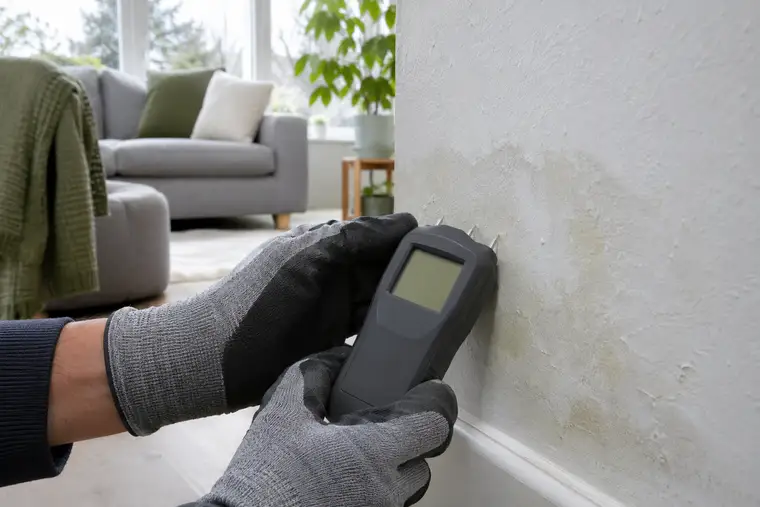
A reading on its own means little. What matters is how it compares with the same material in a dry room of the same house. Drywall, wood and concrete each have their own normal range, so the technician takes a dry reference before judging the wet area. Ask to see both numbers side by side.
- High readings near the floor and normal ones higher up show how far the water wicked.
- Readings that drop each day show the drying is working.
- A reading that stops falling points to trapped water or a source that is still leaking.
Questions about walls, floors and insulation
Our guide on what can be saved after water damage covers each material.
Why does wet drywall sometimes come out?
When insulation inside the wall is soaked, the water was dirty or the drywall has swollen and softened. A strip at the bottom is removed so the cavity can dry.
Can water damaged hardwood be saved?
Often, if drying starts quickly. Boards may cup at first and flatten as they dry. Boards that stay cupped or crown after drying may need sanding or replacing.
What happens to laminate after a leak?
Laminate swells at the seams and rarely recovers. It usually comes up so the subfloor can dry.
Is concrete affected by water?
Concrete is not damaged by clean water, but it holds a lot of it and dries slowly, which matters for any flooring laid on it.
What about wet insulation?
Soaked insulation holds water and sags. It is usually removed from walls, ceilings and crawl spaces and replaced once the area is dry.
Do cabinets have to come out after a kitchen leak?
Rarely all of them. The toe kick or a base panel may come off so air reaches the floor underneath.
How do you find water inside walls?
We use moisture meters at several heights, often a thermal camera to spot cool damp areas, and sometimes a small probe hole.
Do baseboards have to come off?
Often, on walls that took on water. Taking them off lets air reach the bottom of the wall and shows whether the drywall behind is damaged. Solid wood baseboards can usually go back on.
Can a wet ceiling be dried without opening it?
Sometimes, if only the drywall got damp from clean water and nothing is sagging. Soaked insulation above usually means the ceiling has to be opened.
Questions to ask on the first visit
A good technician is happy to explain what they see. These questions keep the conversation useful and give you a clear picture of the job before it starts.
Where did the water go?
Ask to see the readings that mark the edge of the wet area, including inside walls and under floors.
What needs to come out, and why?
Each material removed should have a reason, such as soaked insulation or contaminated carpet.
How will progress be checked?
Daily readings at the same points show whether the drying is on track.
What is the plan for the source?
Ask whether a plumber, a roofer or a simple valve fix will stop it happening again.
Questions after the drying
Help with the paperwork is in our insurance claim steps guide.
What should I keep for my insurance company?
Photos and video of the damage, a list of damaged items, receipts for anything you bought and the drying records with daily readings.
Does home insurance usually cover water damage?
Sudden and accidental leaks are often treated differently from slow leaks, wear or rising flood water. Your policy and your agent decide.
What does a lingering smell after drying mean?
Usually that a pocket of moisture was missed, often in pad, the base of a wall or under the house. It should be measured, not covered with air freshener.
How soon can repairs start after drying?
Once the final readings confirm the materials are dry. New drywall, flooring or paint over damp materials traps the water inside.
How can I stop it happening again?
Braided supply lines, leak sensors near appliances, clean gutters, a tested sump pump and knowing where the main valve is cover most of the common causes.
Which parts of Redmond do you take calls from?
We take calls from homes across Redmond, Washington, in the 98052 and 98053 ZIP codes. If you are not sure whether your address is inside the city, tell us the street when you call.
Should I keep the damaged items until the adjuster visits?
Keep them if you can, or at least photograph them clearly and note what each one is. Items soaked by sewage can go sooner, once they are photographed.
Who does the rebuilding after drying?
Repairs such as drywall, paint and flooring come after the house is dry. You are told what was removed and what needs replacing, so the repair can be planned.
Guides that go deeper
- A musty smell that will not leaveWhere it comes from and how to find it.
- Wet hardwood floorsCupping, crowning and what to expect.
- Every service we coverFrom burst pipes to storm water.