Water Extraction and Drying in Redmond, WA
If water is standing on your floors or has soaked the carpet, we extract it first and then dry the structure until the readings show it is dry.
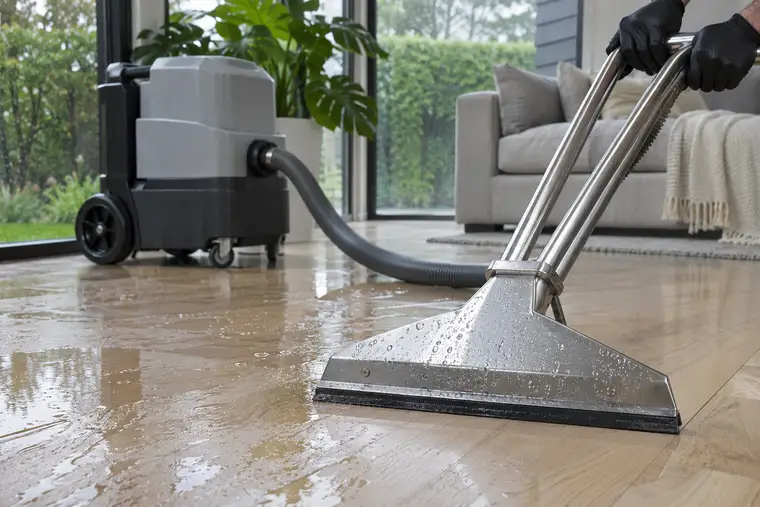
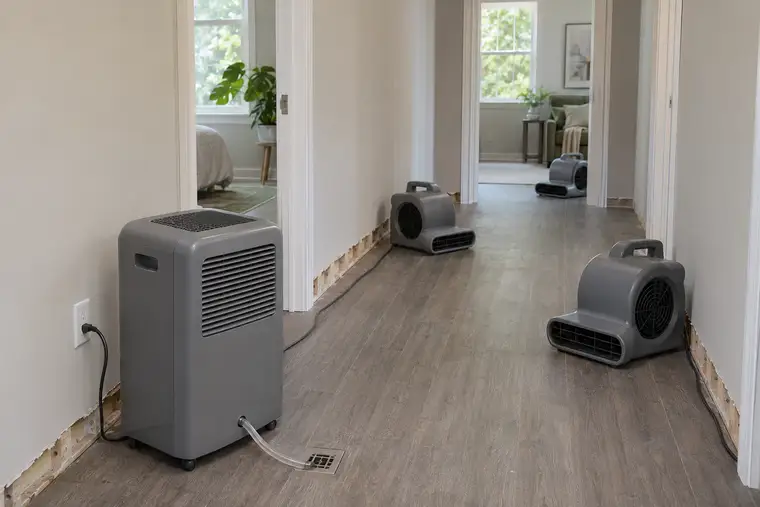
Water extraction first, then structural drying
Water extraction in Redmond is the first half of the work. Pumps and extraction tools remove the standing water quickly, before it soaks any deeper. The second half is structural drying, which takes days of controlled airflow while the readings come down.
Skipping or rushing that second half is where most trouble comes from. A floor that looks fine can still hold water in the pad and the subfloor, and that water keeps working on the wood and the drywall long after the puddle is gone.
Water extraction in Redmond homes also has to move quickly because of the materials. Carpet pad, drywall and the particleboard in cabinets all start to break down within a day, while framing and hardwood take longer to show damage but also longer to dry.
What we ask first
When you call about standing water, we ask where it came from, whether it has stopped and how long it has been there. Those answers tell a local technician what to bring and whether the water can be treated as clean.
What water extraction and drying includes
Water extraction and drying sits at the center of almost every water damage job. It runs from the moment the source is stopped to the moment the materials read dry again, and each part below is planned around what the readings show in your home.
Pumping standing water
Standing water is pumped from floors, basements and garages before it spreads further.
Carpet and pad extraction
Weighted tools press water out of the fibers and the backing.
Moisture mapping
Meters and often a thermal camera find water inside walls and under floors.
Removing what cannot dry
Swollen particleboard, soaked pad and wet insulation come out.
Setting the drying zone
Air movers, dehumidifiers and closed doors create a contained area that dries faster.
Daily readings
Equipment is moved as each area dries, until the readings match the dry rooms.
Is this more than a mop can handle?
A small spill on tile can be wiped up with a towel. These signs mean the water has gone somewhere a towel will not reach.
Time for extraction and drying
- Carpet squelches when you step on it.
- Water ran under a wall or a cabinet.
- The bottom of the drywall feels soft.
- Hardwood edges are lifting.
- Water came through a ceiling.
Probably fine to handle yourself
- A small clean spill on tile or vinyl.
- Water wiped up within minutes.
- No walls, cabinets or carpet touched.
- No smell a day later.
If you are between the two, a few minutes with a moisture meter settles the question, and it is far easier than finding out three weeks later from a smell.
Why small spills still matter
The worst outcomes usually come from water that was judged too small to bother with. A slow leak under a cabinet, a spill that ran under the dishwasher or a toilet overflow that soaked into the subfloor can all look finished from above while the wood underneath stays wet for weeks.
Where standing water usually starts
| Source | What tends to get wet | How the water is treated |
|---|---|---|
| A split supply pipe | Walls, floors, the ceiling below | Clean, if found early |
| A failed water heater | Garage or closet floor and the walls beside it | Clean |
| A washer or dishwasher | Kitchen and laundry floors, cabinet bases | Gray, because it carries soap and food |
| An overflowing toilet | Bathroom floor and the ceiling under it | Depends on what was in the bowl |
| Rain through a door or window | Flooring near exterior walls | Contaminated once it crosses the ground |
| A drain backing up | Lowest floor, basement, crawl space | Contaminated |
The pages on broken pipe water and appliance and heater leaks go deeper on those sources. Dirty water follows the stricter steps in sewage cleanup.
Inside a water extraction visit in Redmond
Safety and source
Power to wet areas is turned off, the source is confirmed stopped and the type of water is decided.
Readings across the room
The technician measures outward from the wettest spot until the edge of the water is found, then marks and photographs it.
Extraction
Pumps clear the standing water, extraction tools pass over the carpet several times, and hard floors are squeegeed and extracted.
Opening what needs air
Baseboards may come off, small holes may go in behind them, or wet drywall may be cut low so the cavity can breathe.
The drying zone
Air movers go where the water went and a dehumidifier is sized for the space. Doors close to keep the zone contained.
Return visits
Readings are taken again and the setup is adjusted until every area matches the dry parts of the house.
Before anything is removed, you hear what the readings show and why each step is needed. The work goes ahead once you agree.
Living with the equipment
On the first visit you can expect noise and some disruption. Air movers are loud and run day and night, and the drying zone may be closed off with plastic sheeting. It is worth planning where people will sleep if a bedroom is part of the zone.
Most jobs need a few return visits to take readings and adjust the equipment. Each one is short, and each one should show the numbers falling.
How long different floors take to dry
What the water soaked decides how long the room stays out of use, and how much of it can stay in place. These are the floors we see most often.
Carpet and pad
Carpet often dries well after extraction. The pad usually goes, because it holds water against the subfloor.
Hardwood
Wet hardwood swells and cups. Slow, steady drying with the room closed gives it the best chance to flatten again.
Laminate and vinyl plank
The core swells and water hides beneath it, so planks often have to be lifted.
Tile
The surface sheds water, but grout and the subfloor under it still need checking.
Our guide on wet hardwood floors explains how to tell whether boards can be saved.
Before new flooring goes down
A floor is ready for repairs only when the subfloor reads dry too, not just the surface. Laying new carpet or flooring over a damp subfloor traps the moisture and leads to smells, warping and mold within weeks.

Drying in a damp climate
Redmond has mild, wet winters, and the long rainy seasons keep crawl spaces and attics damp for months. Outside air is often already full of water, so opening the windows usually slows drying down.
The better approach most of the year is a closed drying zone. Dehumidifiers pull water from the air, air movers keep that dry air moving across wet surfaces, and a steady indoor temperature helps the materials release their moisture.
Why heat alone does not work
Heat on its own is not the answer. Warm air holds more water, and without dehumidifiers that water simply moves to the next cold surface, such as a window or an outside wall. Heat works best as part of the setup, not instead of it.
What to ask while the equipment runs
What are today’s readings?
They should fall a little on every visit, area by area.
How many more days?
Ask for a realistic range based on what still reads wet today.
Which materials are staying?
Ask which materials stay and which come out, with the reason for each.
Can I have the records?
You should receive the photos and readings for your files and your insurer.
If the water is still active, the first hour steps come before any of this.
Belongings caught in the water
Furniture, boxes and rugs on a wet floor keep soaking up water and can stain the flooring beneath them. Moving them early helps both.
Wood furniture
Lift it onto blocks or foil so the legs stop wicking water and staining the floor.
Papers and photos
Move them to a dry room. Wet photos can be laid face up on a towel.
Area rugs
Lift them off the floor and hang them to drain.
Electronics
Unplug only from a dry spot, and leave anything that got wet switched off.
What usually cannot be saved
Upholstered furniture that sat in clean water can sometimes be dried. Pieces soaked by dirty water usually cannot. Photograph everything before it is moved or thrown away, because those photos help any insurance conversation later.
How to prevent standing water next time
Most standing water starts with a part that wore out without anyone noticing. A few checks through the year catch many of them before they let go.
- Know where the main water valve is and check that it turns.
- Swap rubber washer hoses for braided ones, and look at them once a year.
- Look under sinks and around the water heater every few months.
- Keep gutters and downspouts clear before the rainy season.
- Wrap pipes in the garage and crawl space before the first freeze.
- Put a leak sensor by the water heater and the washer.
Water extraction questions
How long does extraction take?
Water extraction in Redmond, WA homes usually takes a few hours. Drying the structure takes several days after that, depending on what got wet and how deep the water went.
Why is the carpet pad being thrown out?
Pad soaks up water and presses it against the subfloor. Drying it properly is slow and unreliable, so it is normally replaced while the carpet itself may be kept.
Is the noise of the equipment normal?
Yes. Air movers and dehumidifiers are loud and run around the clock. Closing the doors to the drying zone helps.
Will the technician need to open my walls?
Sometimes. Small holes behind the baseboard are often enough. Walls with soaked insulation or contaminated water usually need a strip of drywall removed.
Can I keep using the room?
Usually yes, with care. Walk around the equipment, keep the doors closed and avoid moving anything the technician placed.
Where do my belongings go during drying?
Move them into a dry room if you can. Heavy pieces can stay on blocks so air reaches the floor around them.
When can new flooring go in?
Only after the subfloor reads dry, not just the surface. The final readings decide, and laying flooring too early traps the moisture underneath.
Is water extraction in Redmond different in winter?
Water extraction in Redmond, WA follows the same steps all year, but damp outside air means drying relies more on dehumidifiers and a closed house. Expect the drying stage to run a little longer in the rainy months than in a dry summer week.
Can I rent a wet vacuum and do it myself?
A wet vacuum is fine for a small amount of clean water on a hard floor. It will not dry the pad, the subfloor or the inside of a wall, and those are the places that cause trouble later.
Why are there holes behind my baseboards?
Small holes at the bottom of a wet wall let dry air into the cavity. They often save the wall from being cut open, and the baseboard covers them afterwards.
Does the dehumidifier need to drain somewhere?
Restoration dehumidifiers usually pump into a sink or a drain, or into a container that needs emptying. The technician sets it up so it can run without stopping.