Water Damaged Hardwood Floors and How They Recover
A wet wood floor that starts to cup is not always ruined, and slow, measured drying gives it the best chance to flatten again.
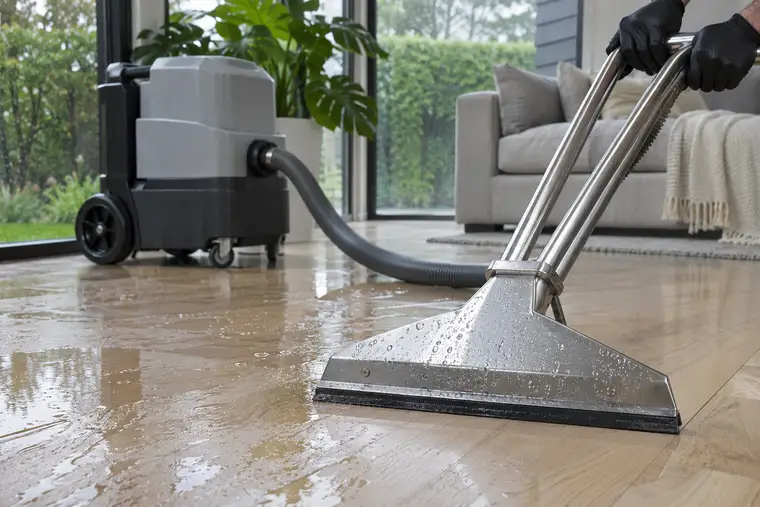
Why wet boards change shape
Wood takes on water and swells, and it lets water go and shrinks. A hardwood floor is a row of boards pressed tightly side by side, so when they swell there is nowhere for them to go but up.
Water usually reaches the underside of the boards first, from the subfloor. The bottom of each board grows wider than the top, the edges lift and the board dips in the middle. That shape is called cupping, and it is the most common sign of water damaged hardwood floors.
Wood moves even without a leak
Wood moves with the seasons even without a leak. A floor that shows small gaps in a dry winter and closes up in a damp spring is behaving normally. A leak simply pushes that movement much further, much faster, and unevenly from bottom to top.
Cupping, crowning and buckling
| What you see | What is happening | What usually comes next |
|---|---|---|
| Edges higher than the middle | Cupping. The underside is wetter than the top | Often flattens as the floor dries slowly |
| Middle higher than the edges | Crowning. Often from sanding a cupped floor too soon | May need sanding once fully dry |
| Boards lifting off the subfloor | Buckling. Severe swelling with nowhere to go | Usually needs boards replaced |
| Dark stains or black lines | Water reacting with the wood or the finish | Sometimes sands out, sometimes not |
| Gaps after drying | Boards shrinking back past their normal size | Often closes again as humidity settles |
What to do first when a wood floor gets wet
The faster the surface water comes off, the less reaches the underside.
Stop the water
Close the valve or the main.
Remove the surface water
Use towels, a mop or a wet vacuum, working toward the drier part of the room.
Clear the floor
Lift rugs and move furniture off the floor or onto blocks, so nothing traps moisture.
Keep the heat steady
Do not point space heaters at the floor or turn the furnace up high, because fast drying cracks wood.
How a hardwood floor is dried
Drying water damaged hardwood floors is about patience. The goal is to draw water out of the boards and the subfloor evenly, top and bottom, without pulling it so fast that the wood splits.
Measure the boards and the subfloor
Readings show how wet the wood is compared with a dry room.
Draw water from the surface
Specialized floor mats or panels can pull moisture up through the boards.
Dry from below where possible
Air and dehumidifiers in the crawl space or the room underneath dry the subfloor.
Control the room
Dehumidifiers bring the humidity down steadily, not all at once.
Wait for the readings
The floor is judged only once it matches the dry areas.
You see the readings each day and hear what the floor is doing, so any decision about sanding or replacing is made with the numbers in front of you.
Why sanding water damaged hardwood floors too early causes crowning
A cupped floor looks like it needs sanding flat. If it is sanded while still wet, the high edges are removed. When the wood finishes drying and shrinks back, those edges end up lower than the middle and the floor crowns.
What to wait for
- Readings that match a dry room.
- A few weeks for the boards to settle.
- A second look at the shape once dry.
- Sanding only the areas that still need it.
What to avoid
- Sanding a floor that is still cupped and wet.
- Heaters aimed at the boards.
- Nailing down boards that are still swelling.
- Refinishing before the subfloor is dry.
Engineered wood, laminate and vinyl after water damage
Not everything that looks like hardwood behaves like it, and the advice for water damaged hardwood floors does not always apply. Before deciding anything, it helps to know which kind of floor you have. A board pulled from a closet or a floor vent opening often shows the layers at a glance.
Solid hardwood
Solid hardwood has the best chance of drying and staying, and it can be sanded and refinished several times.
Engineered wood
Engineered wood has a real wood top on a layered core. Some cores tolerate water, but many delaminate.
Laminate
Laminate has a printed top on a fiberboard core, so it swells at the seams and rarely recovers.
Luxury vinyl plank
The planks survive water, but they trap it underneath, so they often come up to dry the subfloor.
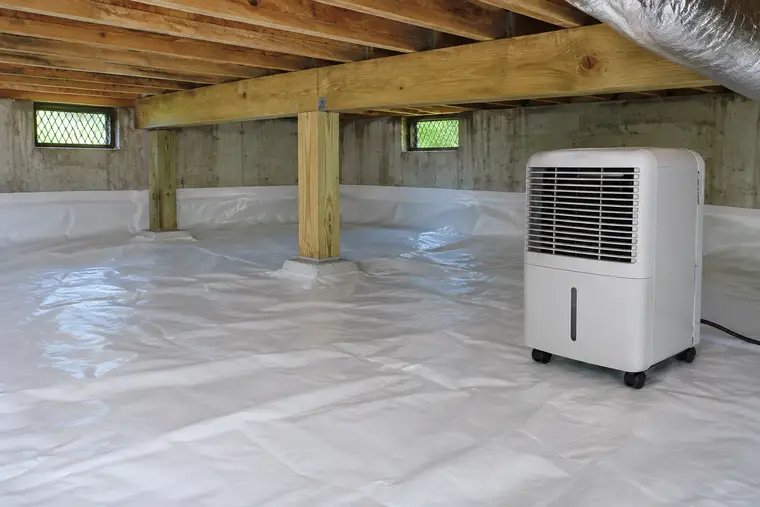
Wood floors over a crawl space
Many Redmond homes have wood floors over a crawl space. That has a downside and an upside. A wet crawl space keeps feeding moisture into the subfloor from below, so the floor cannot finish drying until the space underneath is dry too.
On the plus side, a crawl space gives access to the underside of the subfloor. Drying from below as well as above often brings the boards back faster and more evenly.
The basement and crawl space page explains how the space under the house is dried.
When hardwood boards need replacing
- Boards that buckled and lifted off the subfloor.
- Boards still cupped after the readings show the floor is dry.
- Wood that sewage or outside flood water reached.
- Black stains that go deep into the grain.
- Engineered boards that have delaminated.
With water damaged hardwood floors, often only a section is replaced and woven into the surrounding floor, then the whole room is sanded and refinished so it matches. The subfloor under any removed boards is checked and dried before the new wood goes down, so the repair does not cup in turn.
Using the room while the floor dries
Drying a wood floor can take longer than the rest of the room, and the house still has to work around it. A few habits protect the boards in the meantime.
Light foot traffic
Walk on it in socks or soft shoes and keep heavy furniture off it.
Leave the mats in place
Floor drying panels only work if they stay sealed against the boards.
Give it time after drying
Wait a few weeks for the boards to settle before judging the shape.
Keep humidity steady
Large swings in indoor humidity make boards move again.
Hardwood floor questions
Will cupped hardwood flatten on its own?
Often, once the wood and the subfloor dry evenly. It can take weeks. Sanding before then usually makes it worse.
How long does a hardwood floor take to dry?
Usually longer than the rest of the room, often a week or two of drying, plus time for the boards to settle afterwards.
Can I put a fan on the wet floor?
Gentle airflow helps, but strong heat or fast drying can crack the boards. Steady dehumidification is safer.
Why do I see gaps between boards after drying?
The wood may have dried a little past its normal moisture level. Gaps often close as the house humidity returns to normal.
Does insurance cover water damaged hardwood?
It depends on the cause and your policy. Photograph the floor early and keep the drying readings.
Can the finish be saved?
Sometimes. Light white haze can fade. Dark stains or peeling finish usually means sanding and refinishing once dry.
Is it safe to walk on a wet wood floor?
Yes, gently. Avoid dragging furniture across it and keep heavy loads off it until it is dry.
Should I pull up a few boards to let it breathe?
Not without a reason. Removing boards can damage the tongue and groove. Specialized drying usually works without it.
Why did my floor cup weeks after a small leak?
Water that reached the subfloor kept feeding the underside of the boards. Slow leaks under a dishwasher or a fridge often show up this way.
Can a refinished floor hide old water damage?
Sanding can remove surface stains, but if the subfloor stayed wet, the boards may cup again. Readings before refinishing tell you whether it is safe.
Do area rugs make a wet floor worse?
Yes. A rug traps water against the wood and slows drying. Lift it, dry it separately and leave the floor open to the air.
Will new boards match the old ones?
A good installer weaves new boards into the old floor, then the room is sanded and finished together so the color evens out.
Can I sand a cupped floor myself once it is dry?
If the readings are normal and the boards have settled for a few weeks, a light sand and refinish is possible. Deep cupping or crowning is a job for a flooring professional.
Do water stains on hardwood always mean damage underneath?
Not always. Light white marks are often only in the finish. Dark gray or black stains usually mean water soaked into the wood itself.