Musty Smell After Water Damage and How to Get Rid of It
If a room still smells musty after the leak was fixed, something is still damp, and this guide shows you how to find it.
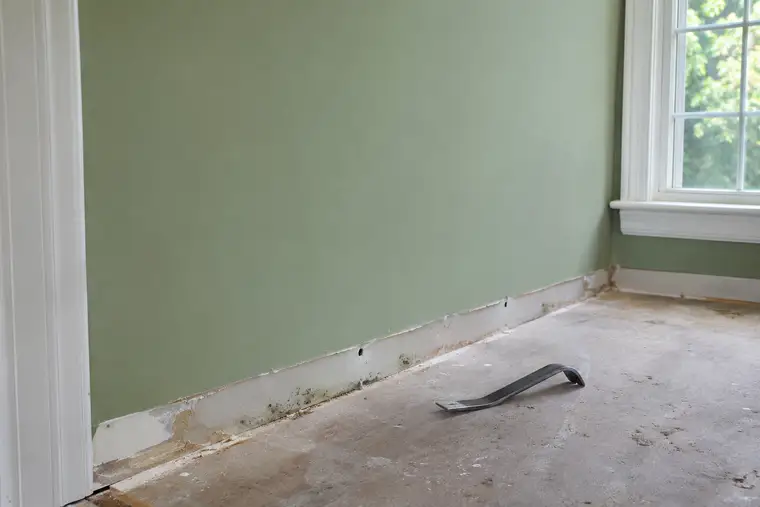
What causes a musty smell after water damage
A musty smell after water damage comes from microbes growing on materials that are still damp. As mold and bacteria feed, they release gases with that heavy, earthy odor. You can smell them long before you can see anything.
That means the smell is useful. It tells you that somewhere nearby, a material never fully dried. Covering it with candles or sprays hides the warning while the damp keeps working, and the longer it goes on, the more material ends up being replaced instead of dried.
Where a musty smell after water damage usually hides
A musty smell after water damage almost always has a physical source. In most homes the smell traces back to one of a handful of places. Each of them soaks up water, sits out of sight and gets very little airflow.
Carpet pad
The foam under the carpet holds water for weeks after the surface feels dry.
The base of a wall
Drywall wicks water upward, and the bottom plate behind it stays wet.
The crawl space
Damp soil, wet insulation or torn plastic under the house hold moisture for months.
Ceiling insulation
After a roof or bathroom leak, the batts above stay heavy and damp.
Under cabinets
The hollow space below the toe kick traps water from sinks and dishwashers.
Below laminate or vinyl
These floors seal water underneath them, out of reach of the air.
How to find the source of a musty smell
You can narrow down the source of a musty smell after water damage with nothing more than your nose and some patience. Do it after the house has been closed for a few hours, when the smell is strongest, and before you have cooked or lit anything scented. Go room by room rather than wandering, so you can compare.
Walk the house slowly
Note the room where the smell is strongest, then the corner of that room.
Get low
Smell along the baseboards, inside lower cabinets and at the edges of the carpet.
Lift what you can
Lift a corner of carpet near the tack strip, a floor vent cover or the panel under the dishwasher.
Check below and above
Look through the crawl space hatch, the attic hatch and in the room under each bathroom.
Write down what you find
Note the room, the spot and anything visible, so a technician can go straight there.
Keep yourself protected
Wear gloves and a simple dust mask when you lift carpet or open a cabinet base. If you see fuzzy growth or the smell becomes much stronger, close it up again and leave the rest to someone with protective gear.
Why the smell gets worse on rainy days
Humid air makes whatever is growing in a damp material more active.
Redmond has long stretches of wet weather, and indoor humidity rises with it. A wall cavity or a carpet pad that was almost dry takes on moisture again, the microbes become more active and the odor returns. People often say the smell comes and goes. That pattern points to a material that is hovering at the edge of dry.
What gets rid of a musty smell and what only hides it
Gets rid of it
- Finding the damp material with a meter.
- Drying it or taking it out.
- Cleaning the hard surfaces around it.
- Keeping indoor humidity steady afterwards.
Only hides it
- Air fresheners and scented candles.
- Baking soda sprinkled on the carpet.
- Painting over a stain on the wall.
- Running a fan in the doorway for a day.
An air purifier can make a room more pleasant while the real work happens, but it cannot dry anything. Neither can an ozone machine, which also is not something to run in a room where people or pets spend time.
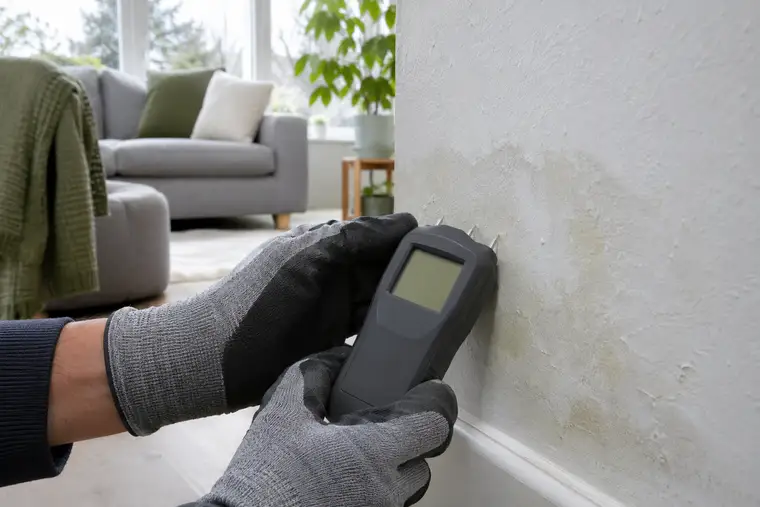
How a moisture check finds the source
A technician compares readings in the smelly area with the same materials in a part of the house that never got wet. A thermal camera can show cool patches where water is evaporating behind a surface.
- Readings along each wall at a few heights.
- Probes under the carpet edge and into the pad.
- A look into the crawl space and at the subfloor from below.
- Checks around the original leak and in the room underneath it.
Once the damp spot behind a musty smell after water damage is found, the fix is usually smaller than people fear. Once a strip of drywall, a section of pad or a patch of insulation is dried or replaced, the odor fades within days.
Other smells after a leak and what they mean
Not every bad smell after a leak is damp. A few odors have their own causes, and knowing the difference saves time.
| The smell | What it often is | Where to look |
|---|---|---|
| Earthy, like a cellar | Damp material with microbes growing | Pad, wall bases, crawl space |
| Sour or like rotten eggs | A dry drain trap letting sewer gas in | Floor drains and unused sinks, run water into them |
| Sharp and sewage like | A drain leak or an old backup not fully cleaned | Under bathrooms and around the main line |
| Like wet dog or old socks | Carpet or rugs that dried too slowly | The carpet and pad in the wet room |
| Burning or hot dust | Electrical trouble, not water | Switch off the circuit and call an electrician |
When the smell is a health question
For most people a musty smell is unpleasant rather than harmful. Some people react more strongly to damp and mold, with a stuffy nose, itchy eyes or coughing that improves when they leave the house.
If anyone at home has asthma, allergies or a weakened immune system, treat a lingering smell as a reason to act sooner. For general guidance, the EPA page on mold and moisture is a good place to start.
How to keep the musty smell from coming back
Watch the humidity
A simple hygrometer from a hardware store helps. Indoor readings that stay high through winter are worth acting on.
Use the fans you have
Run bathroom and kitchen fans long enough to clear the steam.
Look under the house
Check the crawl space after heavy rain each season.
Dry spills the same day
Small leaks left overnight are where smells begin.
Musty smell questions
How long should a damp smell last after a leak?
A faint smell while the drying equipment runs is normal. Once the house reads dry it should fade within a few days. If it stays longer, something is still wet.
Can a musty smell come from the crawl space into the house?
Yes. Air from under the house rises into the rooms above through gaps in the floor, vents and ducts, bringing the smell with it. It is often strongest in the lowest rooms first thing in the morning.
Does a musty smell always mean mold?
Usually it means microbes are growing on something damp, which often includes mold. The fix is the same either way. Find the damp and dry it.
Will steam cleaning the carpet remove the smell?
Not if the pad underneath is the source. Steam cleaning adds more water, which can make the smell stronger for a while.
Why does the smell come back when the heat is on?
Warm air carries odors further and can draw moisture out of a damp material, which releases more of the smell.
Can I find the source without opening anything?
Often you can get close. A moisture meter or a thermal camera usually pinpoints it without cutting into walls.
Is a musty closet a sign of a leak?
Sometimes. Closets on outside walls also get damp from condensation when air cannot move. Check the wall and the floor for readings before blaming a pipe.
Can a smell linger in a house that was dried properly?
A trace can stay in fabrics and on surfaces for a few days. Washing curtains and cushions and wiping hard surfaces usually clears it. A smell that grows stronger instead of fading means damp is still there.
Is the smell in my basement normal for an older house?
Many older lower levels smell a little damp, but a strong musty odor is still a sign of moisture somewhere. A dehumidifier and a look at the gutters and grading often make a big difference.
Should I tell my insurer about a musty smell?
If it started after a covered leak, yes. It may mean the first drying missed a spot, and the sooner that is recorded, the easier it is to deal with.
Can a bathroom fan cause a musty smell?
A fan duct that ends in the attic or has come loose blows warm, wet air where it should not go. Damp insulation around it often smells musty from the room below.