Storm and Flood Damage Cleanup in Redmond, WA
If rain or flood water got into your home, we treat it as dirty water, remove it safely and dry every room it reached.


Why flood water is treated as dirty water
Flood damage in Redmond is rarely a river at the door. More often it is a gutter that could not keep up, a patio that drains toward the house or a window well that filled during a long night of rain. However it arrives, water that traveled over the ground is handled as dirty, even if it runs clear.
Roof water is the exception at first. A drip through the roof into the attic starts close to clean, but it soaks the insulation, sits on the drywall and grows less clean every day it stays.
Official flood safety
For official guidance on preparing for and staying safe during floods, see Ready.gov on floods. If officials tell you to leave, go, and deal with the house once it is safe to return.
How storm water gets into Redmond homes
Long winter storms bring the most trouble. Long, steady rain soaks the ground until the water has nowhere to go but toward the house, and it finds the weakest point it can reach.
Overflowing gutters
Water pours down the wall and pools at the foundation.
Low thresholds
Water runs in from a patio, a deck or a driveway.
Window wells
They fill and leak through the window into a lower level.
Roof openings
Wind lifts shingles or a blocked valley sends water under them.
Melting snow
After a rare snowfall, melting snow can soak the ground faster than it drains.
Overloaded drains
Yard and floor drains back up in a long downpour.
What to do while the storm is still going
Stay safe
Keep well back from fallen wires, and stay out of standing water anywhere the electricity could still be live.
Slow the water
Clear an overflowing downspout only if you can do it safely from the ground.
Protect what you can
Lift belongings off the floor and put towels along doors.
Take photos
Photograph where the water is coming in and how far it reached.
What flood damage cleanup in Redmond, WA covers
Cleaning up flood damage in Redmond, WA follows a set order, from getting the water out to the final readings.
Check safety
The power, the structure and the water are checked before anyone works.
Remove water and mud
Pumps and extractors clear the water, and debris comes off floors and walls.
Remove what it soaked
Carpet, pad, insulation and the bottom of the drywall are removed, because the water came from outside.
Clean and disinfect
Floors, framing and hard surfaces are cleaned and disinfected.
Dry and verify
Dehumidifiers run until readings match the dry parts of the house.
Every step is explained to you before it starts, and you choose whether to proceed. If the storm damage also needs a roofer or a gutter repair, you hear that too, so the repair and the drying can be planned together.
Which belongings can be saved after a flood
| Belonging | Likely outcome | What to do now |
|---|---|---|
| Family photos | Often recoverable | Separate them gently and dry face up on paper towels |
| Insurance papers and deeds | Often recoverable | Seal them in zip bags and keep them cold until there is time to dry them |
| Couches and beds | Usually lost | Photograph them, then set them aside for the adjuster |
| Anything in the pantry the water reached | Lost | Throw it out, cans included |
| Solid wood tables and chairs | Often saved | Wipe down, disinfect and let them dry indoors slowly |
| Lamps, chargers and small appliances | Needs checking first | Leave them unplugged until someone has checked them |
Drying a house during the rainy season
Flood damage in Redmond, WA tends to come in the wettest months. Redmond has mild, wet winters, and storm damage usually arrives when the outside air is already damp. Drying is done with the house closed up and the dehumidifiers doing the work, not with open windows.
Expect the drying stage to run a little longer than it would in a dry summer week. The readings, not the calendar, say when it is finished.
Crawl spaces after a storm
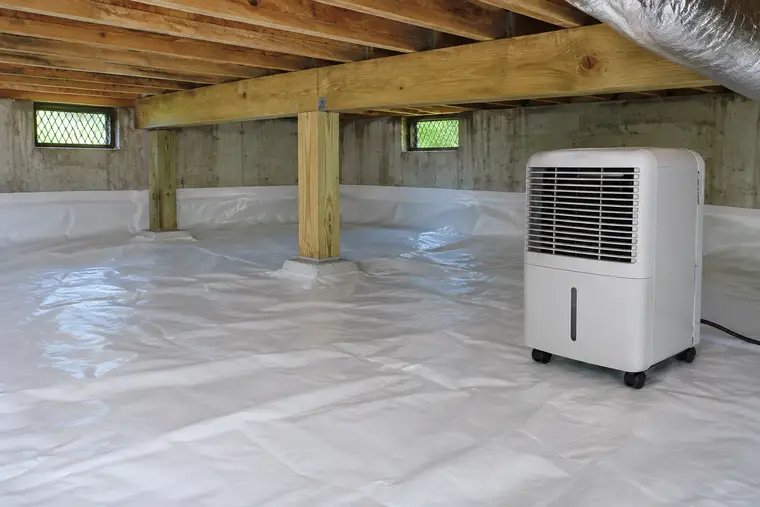
Crawl spaces and lower levels take the longest after a storm, because they are cool and the ground around them stays wet. A dehumidifier left running under the house, and a new vapor barrier once it is dry, help keep the moisture from coming back up into the rooms above.
How to prepare for the next storm
Clean the gutters
Clear them in late fall and again after windstorms.
Extend the downspouts
Extensions carry water several feet away from the foundation.
Add window well covers
Clear plastic lids stop wells filling in a downpour.
Take photos now
Photos of each room today make any later claim easier.
Storm and flood questions
How is storm water different from a pipe leak?
A supply pipe leaks clean water. Storm water that ran across the ground carries soil and other contamination, so more of what it soaks has to be removed rather than dried.
My basement leaks only in big storms. Why?
The ground is saturated and water is pushing against the foundation, usually where a gutter or a downspout empties too close to the house.
Does flood insurance work like home insurance?
No. Rising water from outside is normally excluded from home policies and covered by a separate flood policy. Wind driven roof leaks are often handled differently again.
Can drying start while it is still raining?
Yes. Getting the water out and the equipment running limits damage, even if the opening that let the rain in can only be repaired later.
Why is my carpet being removed when it looks fine?
Outside water carries contamination into the carpet and the pad, and they cannot be cleaned to a safe standard afterwards.
What smells normal after a storm leak and what does not?
A faint damp smell during drying is normal. An earthy, musty smell that remains once the equipment is gone means water is still trapped somewhere.
Should I keep my receipts for storm cleanup supplies?
Yes. Keep receipts for anything you buy to protect the house, along with photos of the damage. Your insurer may ask for them.
Do I need to move out after storm flooding?
Not usually, unless the water reached living areas widely or the power is unsafe. Keep children and pets away from the affected rooms until they are cleaned.
Can storm water damage the foundation?
Repeated water against the foundation can find cracks and seep in. Fixing gutters, downspouts and grading keeps it away.
What should I photograph after a storm?
Where the water came in, how high it reached, every wet room and damaged belongings, plus the outside of the house near the entry point.