About Water Damage Redmond WA and How We Work
We handle water damage in Redmond homes only, and we explain every step before any work begins.

Water damage help for Redmond homes only
Water Damage Redmond WA does one thing, in one place. We take calls about water damage in homes across Redmond, Washington, and help get the water out and the house dried properly.
Keeping to one city and one kind of problem keeps the focus sharp. The weather here, the long rainy seasons, the crawl spaces and the way storms test gutters and roofs all shape how water damage shows up in Redmond homes, and how it has to be dried.
Four rules we follow on every job
We measure instead of guessing
A room is dry when the readings say so, not when it feels dry.
We explain before we act
You hear the reason for every removal and every step first.
We start early
Getting water out quickly saves more than any later repair.
We finish the drying
A house that is only half dried grows mold, so the last reading matters most.
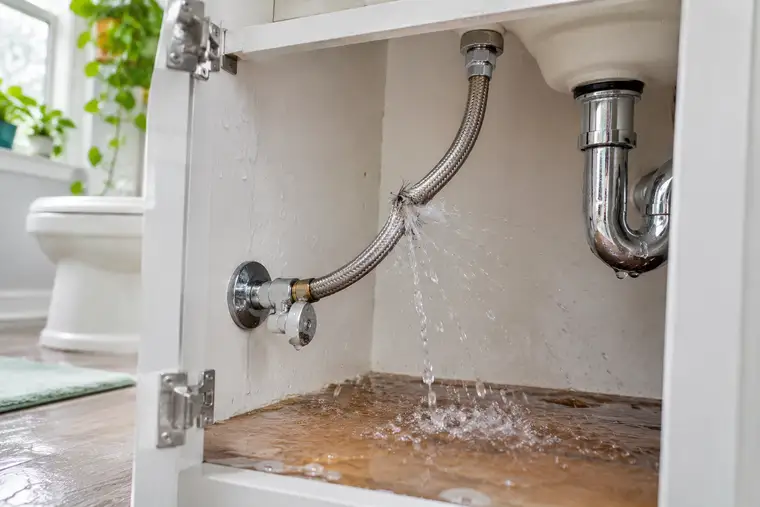
What to expect when you call us
Call Water Damage Redmond WA and tell us what is happening. We answer with a few short questions so the visit starts in the right place.
- Where is the water, and where do you think it came from?
- Is it still coming in, or has it stopped?
- Is it clean, or did it come from a drain or outside?
- Which rooms and floors has it reached?
- Is your home in 98052 or 98053?
If the water is still running, we walk you through closing the valve and making the power safe while you are on the phone.
What happens on the first visit
A licensed local technician can come out to your home. The first visit is about understanding the damage before anything is touched. Expect questions about when the leak started and what you have done so far, and expect to see the meter readings for yourself.
A safety check
The technician checks the power, the structure and the kind of water.
Finding the edges
Moisture meters and often a thermal camera map where the water went, including inside walls and under floors.
A plain explanation
You hear what is wet, what can be dried, what probably has to come out and why.
Your decision
Nothing starts until you have heard the plan and said yes.
How the water is removed
Once you agree to the plan, the work starts with whatever is still standing or soaked.
Extraction
Pumps and extraction tools pull water out of carpets, floors and the slab.
Careful removal
Only materials that cannot be dried, such as soaked pad or insulation, come out.
Cleaning
Hard surfaces touched by gray or dirty water are cleaned and treated.
Photos as we go
Photos are taken before and after each removal for your records.
What happens during the drying days
This is the longest stage, and the one most people find surprising.
Air movers and dehumidifiers run day and night for several days. They are loud and the room gets warm. A technician checks back regularly, takes readings at the same marked points and moves the equipment toward the spots that are still wet. Each visit ends with a short update on what has dried and what has not.
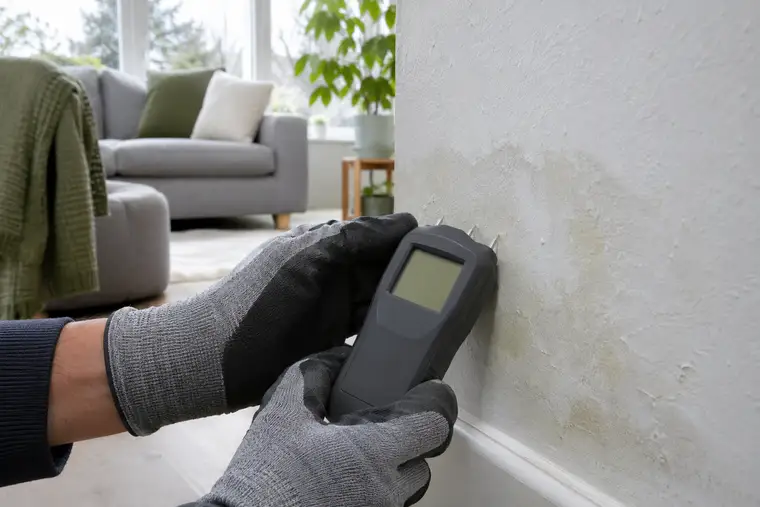
The final moisture check
The drying ends when the readings in the wet areas match the same materials in rooms that never got wet. Then the equipment leaves.
- Final readings at every marked point.
- A summary of what was removed and why.
- Photos and the drying log for your insurer.
- A clear note of what repairs come next, such as drywall or flooring.
Which decisions are yours
You decide
- Whether the work goes ahead after the first visit.
- Whether a borderline item is kept or removed.
- Who does the repairs once the house is dry.
- How you deal with your insurer.
The readings decide
- Where the wet area ends.
- When each room is dry.
- When the equipment can leave.
- When it is safe to close up walls and lay floors.
What we will not do
Some shortcuts make a job look quicker and cause trouble later. We avoid them on purpose.
- We never remove materials without explaining why.
- We never call a room dry because it feels dry.
- We never close up walls or lay floors over damp materials.
- We never leave without final readings.
- We never pressure you into a decision on the spot.
Common water problems in Redmond homes
Redmond has mild, wet winters and dry summers. That pattern shapes the calls we take through the year, and the kind of drying each season needs.
- Long rainy seasons keep crawl spaces and attics damp for months, so leaks there dry slowly.
- Heavy storms test gutters, window wells and roof flashing.
- After a rare snowfall, melting snow can soak the ground around foundations.
- Cold snaps can freeze pipes in garages, crawl spaces and outside walls.
Knowing those patterns helps the first visit go straight to the likely places, and helps the drying plan suit the season.
Why we publish water damage guides
Most people only deal with water damage once or twice in their lives, usually at the worst possible moment. The guides on this site are here so you can make sense of what is happening, even before anyone arrives.
What to do while the water is still on the floor.
How to find the damp behind a smell that will not leave.
Check this guide before anything is thrown out.
The records that make an insurance claim easier.
They are written in plain language, with no scare tactics. If a guide says a material can often be dried, that is because it often can.
Questions about us and how we work
Do you only work in Redmond?
Yes. We take calls from homes in Redmond, Washington, in the 98052 and 98053 ZIP codes.
Are the technicians licensed?
Yes. A licensed local water damage restoration technician comes out to your home.
Is there any obligation after the first visit?
No. You hear the readings and the options, and the decision to go ahead is yours.
Do you handle small leaks?
Yes. Small leaks are often where hidden damage begins, and a moisture check can rule it out.
Where do your guides come from?
They are written for this site in plain language, based on how water moves through houses and how drying is measured. Official sources like the EPA and Ready.gov are linked where they help.
How can I reach you without calling?
Use the get in touch page to send us a note by email.
Why focus on just one city?
Water damage depends on the weather, the soil and how houses are built. Keeping to Redmond keeps the guides and the advice specific to homes here.
Can I read the guides without calling?
Of course. They are here for anyone dealing with a leak in Redmond, whether or not you ever call.
What do you need from me when I call?
Where the water is, where you think it came from, when you found it and your ZIP code. If you are unsure of any of it, that is fine.
Will you tell me if I do not need help?
Yes. If a small leak can be handled with towels and a fan, we will say so plainly.
Do you help with insurance paperwork?
The drying records, photos and final readings are yours to share with your insurer. The insurance claim steps guide explains what else to gather.
How long does a typical job take?
The first visit takes an hour or two. Drying usually runs several days. Larger losses or slow materials like hardwood and concrete take longer.
Do I need to be home for every visit?
Someone needs to let the technician in for checks, but you do not need to stay for every reading.
Can the work be done in stages?
Often, especially if part of the house needs to stay in use. The plan can work around your family where it is safe to.
What happens after the drying ends?
Repairs such as drywall, paint and flooring can begin, with whoever you choose.
What if the readings show more damage than expected?
You are shown where and why, and the plan is updated with you before any extra work starts.
Can I keep using the kitchen or bathroom during drying?
Often, yes, if the room is not part of the drying zone or the equipment can be placed around it. Say what you need at the first visit.
Why does the technician photograph everything?
Photos record the damage before and after each step. They support your insurance claim and explain later why each material was removed.