First Steps for Emergency Water Damage Restoration in Redmond
Find your situation below and follow its steps in order. Most take five minutes and need no tools.
Which of these is happening?
Emergency water damage restoration in Redmond starts with what you do before anyone arrives. What you do in the next few minutes decides how much water soaks into the house. Pick the closest match and jump to it.
Emergency water damage restoration in Redmond goes faster when these basics are done. You do not need to do everything on this page. Stop the water, make the power safe and protect what you can. The rest can wait for the technician, who will measure where the water went and plan the drying.
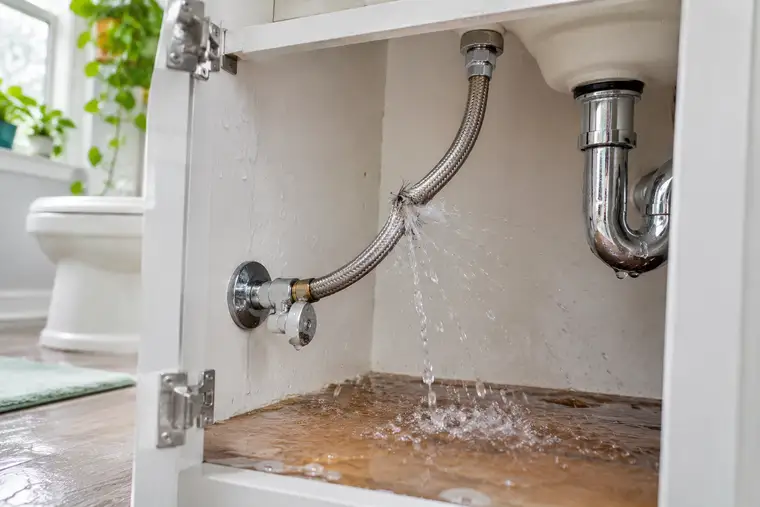
Water is leaking from a pipe, a supply line, a fixture or a water heater.
A drip, a bulge or water coming through a light fixture.
Water came up from a toilet, a floor drain or a tub.
Rain is coming in under a door, through a window or at the foundation.
Safety before anything else
Water and electricity together are the real danger. Deal with that first.
Use breakers only from a dry spot
Switch off power to wet rooms only if you can reach the panel without standing in water.
Stay away from a wet panel
Keep away from it and tell us when you call.
Leave the house if you smell gas
Get everyone outside and call the gas company from there.
Clear the room under a sagging ceiling
Keep everyone out from under it until it has been drained.
Clean water coming from a pipe or fixture
Close the nearest valve
Use the valve under the sink, behind the toilet or behind the washer. For a pipe inside a wall, go to the main.
Find the main if needed
It is usually where the water line enters the house, often in the garage or a utility closet. Turn a round handle clockwise, or a lever a quarter turn.
Empty the pipes
Run the faucet on the lowest floor until it slows to a trickle.
Remove water from hard floors
Use towels, a mop or a wet vacuum while the water is still clean.
Move belongings
Lift rugs, electronics, papers and anything stored on the floor.
If the valve is stuck, or it is the water heater
If the main will not turn, do not force it with a long bar, as old valves can break. Use the valve at the meter box near the street, which usually needs a meter key or a wrench, and tell us the main is stuck.
For a leaking water heater, close the cold valve above the tank and turn off its breaker or set the gas to off or pilot. Let the water cool before you mop.
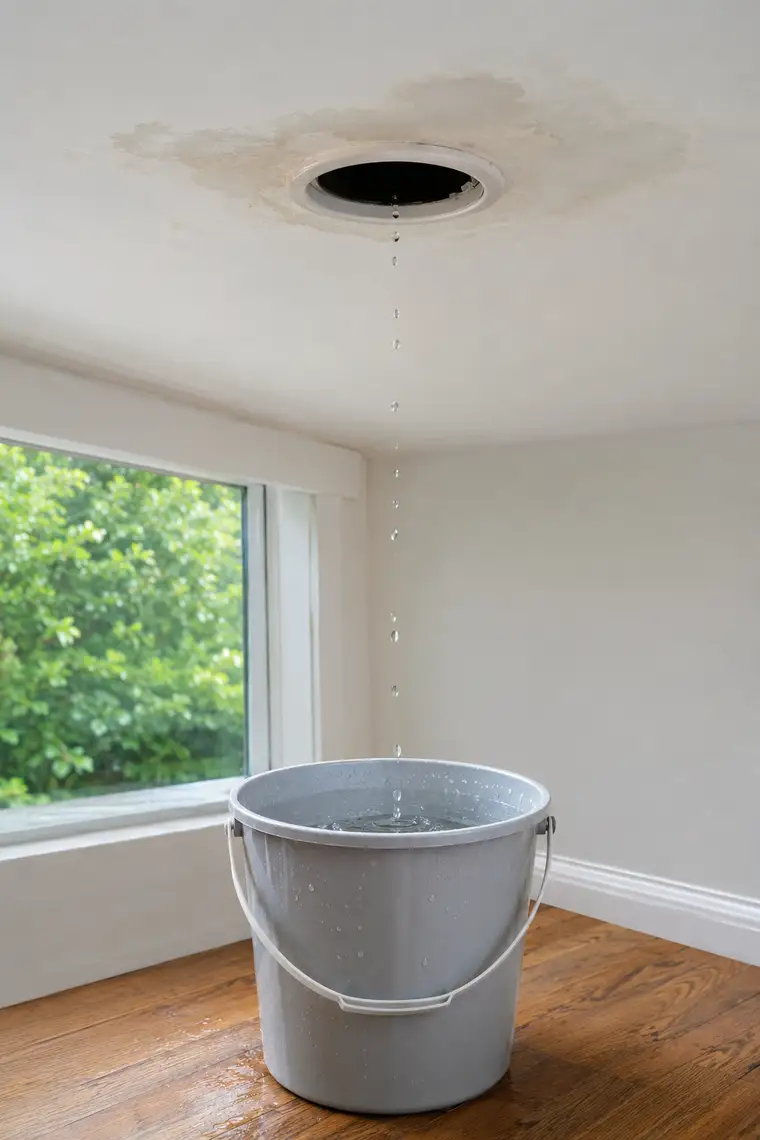
Water dripping from the ceiling
Turn off the breaker for the room
Do this first if water is near a light or a fan.
Clear the space below
Move people and valuables out, then set a bucket and towels below.
Drain a bulging ceiling carefully
A small hole at the lowest point, made from the side, lets the water out slowly.
Stop the source above
Close the bathroom valve, the washer valves or the main.
Our page on ceiling water damage has more detail.
Lights, fans and wiring
If the water is coming through a light fixture, leave the switch alone and keep the breaker off until an electrician has checked the wiring. Water in a fixture box can carry current to places you would not expect.
Once the drip has slowed, move anything still under the wet area and keep the room clear. A ceiling that held water for a while can stay weak even after it stops dripping.
Sewage or dirty water in the house
Water from a toilet, a floor drain or outside is contaminated, so the steps change. The goal is to stop more coming up and keep people away from what is already there.
Stop using water
Do not flush, shower, run the dishwasher or do laundry while the line is blocked.
Keep everyone back
Keep children, pets and anyone unwell well away from the water.
Do not clean it yourself
Do not mop or vacuum it. Close the door to the room instead.
Take photos from the doorway
Then wash your hands and change your shoes.
The sewage cleanup page explains what comes next.
If you must go near it
If you have to walk past the water, wear rubber boots and gloves, and wash them afterwards. Keep food, toothbrushes and clean laundry well away from the area, and do not let pets drink from it.
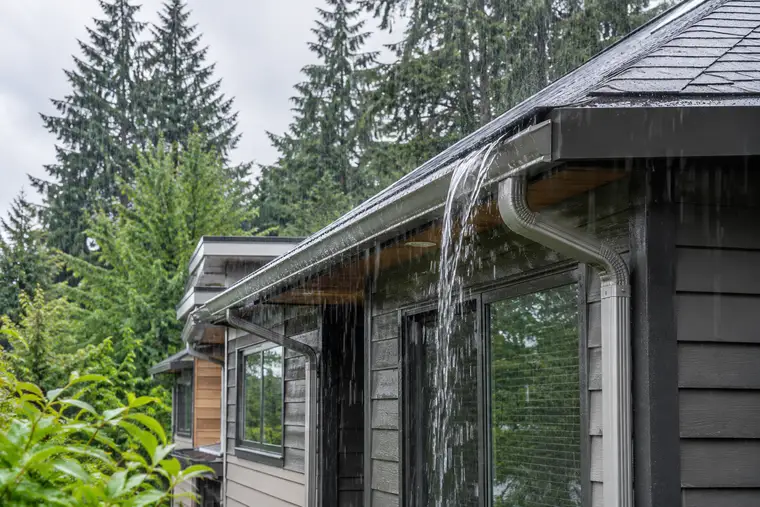
Rain or flood water getting inside
There is no valve to close in a storm, but you can slow the water and protect your belongings.
Rainwater that crossed the yard or the patio is treated as dirty, so wear gloves if you handle it and keep children away from it.
- Move belongings off the floor and to a higher room.
- Put towels or a draft stopper along the door where water is coming in.
- Clear a downspout that is overflowing, only if it is safe from the ground.
- Keep away from water near outlets or cords.
- Photograph where the water is coming in.
The storm and flood water page covers the cleanup.
If you are told to leave
If you are told by officials to leave your home because of flooding, leave. The house and the cleanup can wait until it is safe to return, and photos taken then are just as useful.
Water in the basement or under the house
Lower levels need their own care, because water collects there and the panel, the furnace and the water heater are often nearby. Go slowly, and stop at the stairs if anything looks unsafe.
Do not wade in
If water is near outlets, cords or the panel and the power is on, stay on the stairs.
Check the sump
If the pit is full, see whether the pump has power or a stuck float, without reaching into the water.
Lift what you can
Move boxes, tools and anything stored on the slab to a higher shelf.
If the floor drain backs up
The main line is blocked, so stop using water in the whole house.
Crawl spaces
A crawl space that has flooded is not somewhere to crawl into during the first hour. Leave it closed, note what you can see from the access hatch and tell the technician. Water under the house is pumped out and the space dried once it is safe to work there.
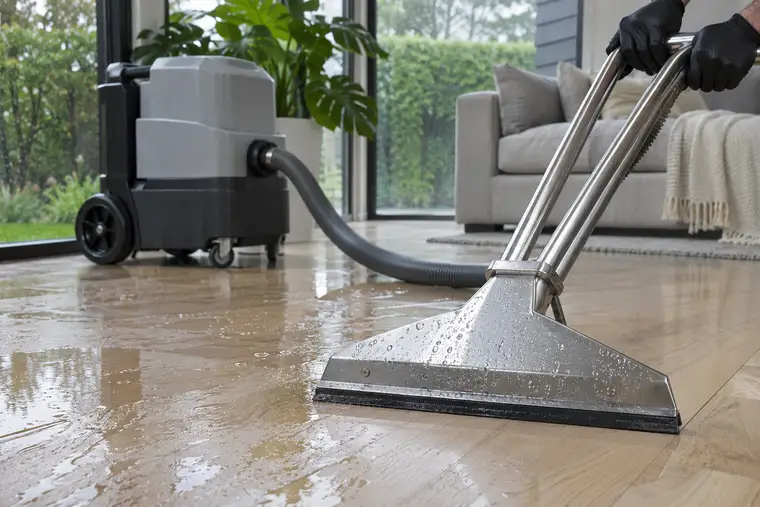
Protecting floors and furniture while you wait
The floor takes the worst of most leaks, and protecting it is part of emergency water damage restoration in Redmond before anyone arrives. A few quick moves limit how much it absorbs.
- Put foil, plastic lids or wood blocks under the legs of furniture that has to stay.
- Pin up long curtains and the skirts of sofas so they stop wicking water.
- Empty the lower drawers and cabinets that sit on a wet floor.
- Roll up area rugs and hang them somewhere they can drain.
- Mop or vacuum clean water off hardwood and laminate as fast as you can.
Leave the carpet down
Wall to wall carpet is better left in place for now. Pulling it up by hand can tear the backing and damage the tack strip, and clean water carpet can often be dried where it lies once the water is extracted.
Take photos and video before you clean up
For emergency water damage restoration in Redmond, photos taken before anything is moved are the most useful record you will have, for the technician and for your insurer.
A short video walking slowly through each wet room is quick and often more useful than a dozen photos. Keep the originals, and do not edit them.
The source
Photograph the split pipe, the full sump, the leaking tank or the drain.
Every wet room
Film each room from the doorway, then closer on floors, walls and ceilings.
Damaged belongings
Photograph damaged belongings and keep a quick list as you go.
The time
Write down when you found the water and each step you took.
What to do and what to avoid after a leak
Things to do
- Closing the valve before anything else.
- Making the power safe from a dry spot.
- Lifting rugs and moving belongings.
- Taking photos first.
Things to avoid
- Running a household vacuum over standing water.
- Switching on lights under a wet ceiling.
- Turning the main back on to check.
- Painting or covering anything still damp.
Calling for emergency water damage restoration in Redmond
| Tell us | Why it helps |
|---|---|
| Where the water is and where it came from | Tells the technician what equipment and care are needed |
| When you found it | Shows how far it may have soaked |
| What you already did | Shows what is already done, such as the valve or the power |
| Whether it is clean or dirty | Decides how the cleanup is done |
| Your ZIP code | Confirms you are in the area we cover |
If you rent, tell your landlord or property manager as well. If you share walls or floors with a neighbor, let them know about any leak that could reach their side.
Emergency water damage restoration in Redmond starts with that short conversation. You do not need to have every answer. If you are unsure where the water came from, say so. The technician works it out on site with the meters.
First hour questions
What is the single most important first step?
Stopping the water. Close the nearest valve, or the main if the leak is in a wall or you cannot find the fixture valve. Every minute it keeps running adds to what has to be dried.
Do I need to switch off all the power?
Usually only the breakers for wet rooms, and only from a dry spot. If the panel itself is wet, stay away from it.
Can I start drying with my own fans?
Once the standing water is gone, fans help the surfaces. The water inside walls and under the floor still needs measuring and proper drying.
Should I call my insurer before cleaning up?
Take photos first, then protect the house. Many people call their insurer the same day, and most policies expect you to stop further damage.
Is it safe to stay home tonight?
Most nights, yes, as long as the leak was clean and the wet rooms have no power running to them. A sewage backup or any smell of gas changes that, so stay away from the area or go elsewhere.
What if the leak is coming from a neighbor above?
Tell them and the building manager immediately so the water can be closed at the source, then protect your own belongings.
Can I throw out wet carpet myself?
Wait until it has been looked at, and until your insurer has seen it, unless sewage soaked it. Clean water carpet can often be dried and kept, and pulling it up early can damage it.
How do I stop a toilet that keeps filling?
Close the small valve behind it. If there is none, lift the float inside the tank to stop the fill.
Should I open windows to dry the house?
Usually not during Redmond rain. Damp outside air slows drying. Keep the house closed, run the heat at a steady level and let a dehumidifier do the work if you have one.
What should I keep handy for next time?
A flashlight, towels, a bucket, gloves and the location of every shutoff, written down where everyone can find it.
What if I cannot reach the main valve?
Close the valve for the fixture that is leaking if there is one. Otherwise use the meter box valve near the street, and tell us the main is out of reach.
How do I protect a hardwood floor right now?
Get the standing water off it as fast as you can with towels or a wet vacuum, move furniture off it and keep the room closed so it does not dry too fast at the surface.
Is a little water in the basement an emergency?
If it is spreading, near electrical equipment, or came from a drain or outside, treat it as urgent. A small clean puddle you have already stopped can wait a few hours.