What Can Be Saved After Water Damage
More of your home and belongings can usually be saved when the water was clean and the drying started early.
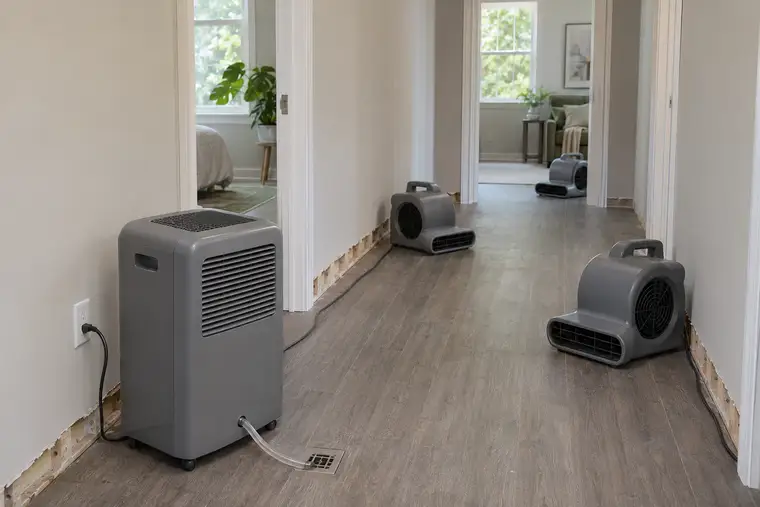
What decides what can be saved after water damage
Working out what can be saved after water damage starts with the same four questions for every item in the house.
What was the water?
It may be clean supply water, gray water from an appliance, or sewage and outside water.
How long did it sit?
The water may have sat for hours, a day or two, or longer before anyone dried it.
Does it soak water in?
Porous materials like carpet and drywall absorb water, while sealed ones like tile and metal do not.
Is it drying?
Moisture readings that fall day by day show it is drying.
Clean water, caught quickly, on materials that let go of water easily, is the best case. Sewage that soaked into something porous for days is the worst. Most real leaks land somewhere in between, which is why each room gets its own look.
Which building materials can be saved
| Material | Clean water, caught early | Dirty water or a long soak |
|---|---|---|
| Drywall | Often dried in place, sometimes with small holes at the base | The wet band is cut out and replaced |
| Wall insulation | Removed if it is soaked through | Removed |
| Studs and joists | Dried and kept | Cleaned, treated and dried |
| Plywood and OSB subfloor | Usually dried | Replaced if it delaminates or softens |
| Concrete slab | Dried, slowly | Cleaned, disinfected and dried |
| Plaster walls | Often kept, slow to dry | Assessed piece by piece |
Which floors can be saved, from easiest to hardest
Tile and stone
Tile is nearly always kept. The question is what is underneath and whether the grout is sound.
Wall to wall carpet
Carpet is often dried and relaid after clean water. The pad underneath is usually replaced.
Solid hardwood
Solid hardwood can recover well if the drying is controlled. Rushing it causes cracks and splits.
Engineered wood
It depends on the core. Some tolerate water, but many swell and separate.
Laminate and click vinyl
These floors are rarely saved, because water gets into the seams and under the boards.
The wet hardwood floors guide explains cupping and how a wood floor is dried.
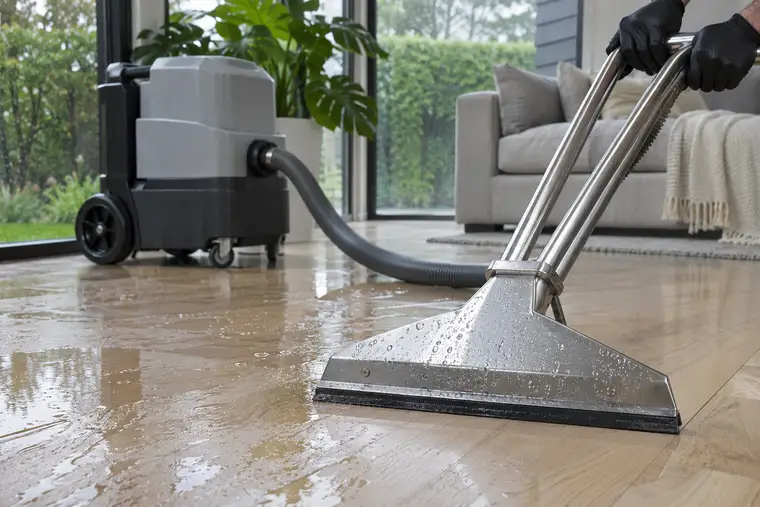
Which furniture and fabrics can be saved
For furniture, what can be saved after water damage is about the material and the water, much like the walls. The sooner a piece is lifted off the wet floor, the better its chances, because wood and fabric keep drawing water up from below for as long as they stand in it.
- Solid wood tables, chairs and dressers usually dry well if they are moved off the wet floor and kept away from direct heat.
- Veneered and particleboard pieces often swell at the base and the edges, and may not recover.
- Upholstered sofas and chairs can sometimes be saved after clean water, if dried quickly. After dirty water they are usually lost.
- Mattresses that took on water are almost always replaced.
- Clothes, linens and curtains wash well in hot water, even after gray water.
How to save wet papers and photos
Paper is more forgiving than most people think, if it is handled with care in the first day or two.
Rinse if needed
Photos and papers touched by dirty water can be rinsed gently in cool, clean water.
Separate carefully
Peel stuck photos apart slowly. If they resist, leave them to soak a little longer.
Dry flat or hang
Lay them face up on paper towels or peg them to a line in a cool room with gentle airflow.
Freeze what you cannot dry yet
Wet books and documents go into zip bags in the freezer to stop mold until there is time.
Irreplaceable items
For irreplaceable items, such as old family photos, letters or artwork, a conservator can often do more than you can at home. Freezing them quickly keeps the options open.
Framed photos and art should come out of the frame while they are still damp, or the print can stick to the glass. Lay them face up and let the air reach both sides.
Electronics and appliances
Anything electrical that sat in water should stay unplugged until it has been checked. Water can leave residue inside that causes problems later, even after the outside looks dry. Write down the model and serial number of each wet appliance, because your insurer may ask for them.
Small electronics
Leave them off and dry. Do not try to charge a wet phone or laptop.
Large appliances
Have a technician check the motor, the controls and the wiring before use.
Furnace and water heater
If water reached the burner or controls, get them checked before turning them on.
Outlets and power strips
Any that got wet should be inspected by an electrician.
Items you should always throw away
Some items are never worth the risk once water has reached them.
- Food, including canned goods, that dirty water touched.
- Medicines and cosmetics that got wet.
- Baby bottles, pacifiers and soft toys after sewage or flood water.
- Mattresses and pillows after dirty water.
- Carpet pad after any water that sat for a day or more.
Why fast drying saves more
Speed changes what can be saved after water damage more than anything else. The same carpet, drywall or wooden chair can be kept or lost depending on how soon drying starts. In the first day, most clean water damage is about drying. After a few days, more of it becomes about replacing.
Our water removal and drying page explains how the first visit sets up the drying to save as much as possible.
How to sort belongings after a leak
A simple system helps when a whole room has to be cleared. Set up three spots in a dry area of the house or the garage.
Keep
Dry or barely damp things that only need airing out.
Dry or clean
Items that need washing, wiping down or slow drying before you decide.
Record and set aside
Photograph items that look lost and keep them until the adjuster says otherwise.
Labels on boxes and a quick note of which room each item came from make the paperwork much easier later.
Saving belongings questions
Can wet drywall be saved?
Often, after clean water caught early. Drywall that crumbles, sags or was touched by sewage is replaced, along with a margin above the water line.
Is carpet worth saving after a leak?
After clean water, often yes, once it is dried and the pad underneath is replaced. After sewage or outside water, it goes.
Should I dry wet books with a hair dryer?
Gentle airflow is better. A hair dryer can warp pages. For large amounts, freeze them in bags until you can dry them slowly.
Can wooden furniture crack while drying?
It can if it dries too fast. Keep it out of direct sun and away from heaters, and let it dry at room temperature.
What should I photograph before throwing things out?
Every damaged item, with a clear shot showing what it is, plus a list. Insurers often ask for both.
Can a wet mattress be dried in the sun?
The surface may dry, but the inside rarely does. Mattresses that took on water are almost always replaced.
Do I need to throw away clothes after a leak?
Usually not. Wash them in hot water soon. After sewage, wash them separately, or throw away items that cannot be washed hot.
Can rugs be saved after a leak?
Many can. Wool and synthetic rugs often clean and dry well after clean water if they are lifted quickly and dried flat or hung. Valuable rugs are worth sending to a specialist.
What about wet kitchen cabinets?
Solid wood boxes often dry in place. Particleboard bases and toe kicks that have swollen usually need replacing, but the rest of the cabinet can often stay.
Is it worth saving a wet sofa?
After clean water, if it can be dried within a day or two, sometimes. After dirty water or a long soak, the padding cannot be made clean and it is usually replaced.
Can wet insulation dry out on its own?
Rarely. It holds water, sags and blocks drying of the framing around it. Soaked insulation is usually removed and replaced once the cavity is dry.
How quickly do I need to deal with wet photos?
Within a day or two if you can. If you cannot get to them that soon, seal them in bags and freeze them, which pauses the damage until you have time.
Can water damaged walls be painted straight away?
Only after they read dry and any stain has been sealed with a stain blocking primer. Paint on damp drywall peels and the stain shows through.
Do musical instruments survive water damage?
Pianos, guitars and other wooden instruments can sometimes be saved, but they need slow drying and a specialist look. Move them out of the wet room as soon as possible.