Washing Machine, Appliance and Water Heater Leaks in Redmond
If your washing machine, dishwasher or water heater is leaking, we find where the water went under the floor and cabinets and dry it out.
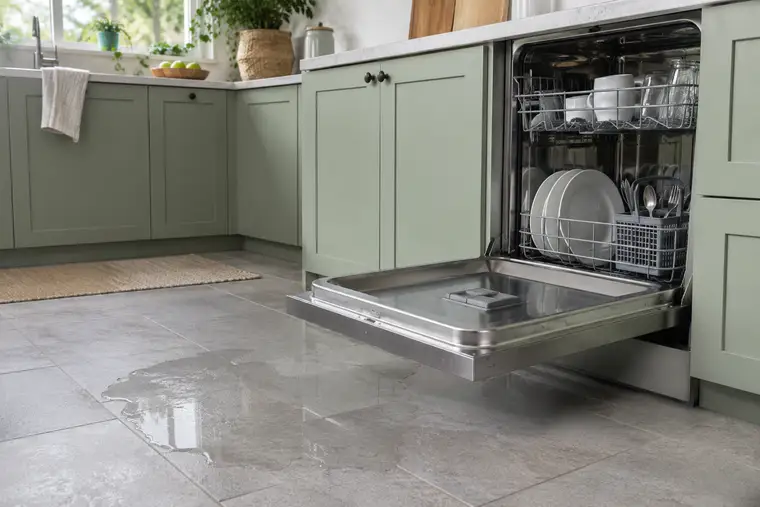
Where appliance leaks hide in each room
Laundry room
Water collects under the washer, inside the wall behind the supply valves and in the ceiling below an upstairs laundry.
Kitchen
Water collects below the dishwasher, behind the refrigerator and in the cabinet base under the sink.
Garage or closet
Water spreads around the water heater, into the bottom of nearby walls and across the slab.
Bathroom
Leaks start behind the toilet supply line and under the vanity where the drain joins the wall.
A washing machine leak in Redmond townhomes and condos deserves extra care, because water from an upstairs laundry can reach a neighbor below.
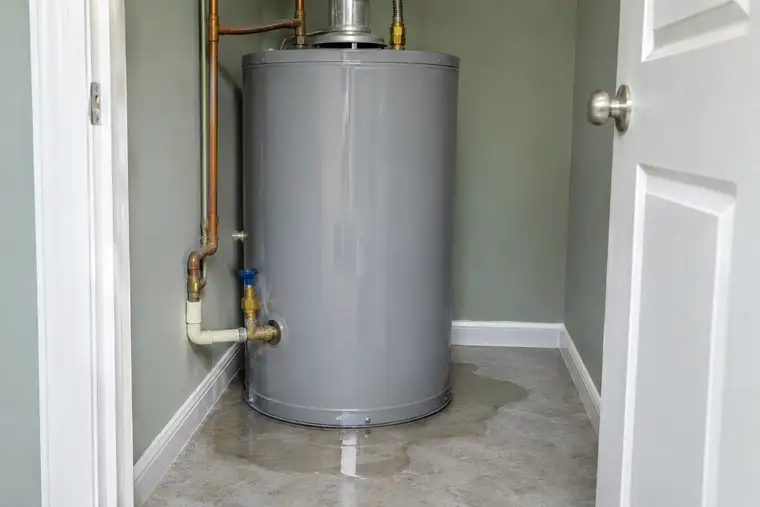
What to do when a water heater leaks
A tank water heater holds a lot of water, and when the tank itself fails it can empty onto the floor quickly.
Close the cold supply
The valve on the pipe above the tank stops more water entering it.
Shut off the heat
Turn off the breaker for an electric heater, or set the gas control to off or pilot.
Stay clear of hot water
Let it cool before mopping, and wear shoes.
Look for the source
A dripping fitting is often simple. Water from the tank body usually means a replacement.
What washing machine leak cleanup in Redmond, WA covers
Cleanup after a washing machine leak in Redmond, or any appliance leak, starts by finding the true edges of the water, not just the visible puddle.
Confirm the supply is off
The water supply is closed and the appliance is unplugged or switched off at the breaker.
Pull the appliance out
The appliance is moved out so the floor and the wall behind it can be measured.
Measure outward
Readings are taken across the floor, into the cabinet bases and up the wall.
Open only what is needed
Only a toe kick, a strip of flooring or a cabinet back is opened, so air reaches the wet subfloor.
Dry and confirm
Equipment runs until the floor and the wall read dry.
The plumber or appliance technician repairs the machine. Our side of the job is the water it let out. You hear the plan and the reasons first, and the work goes ahead when you agree.
Which cabinets and floors can be saved
Often dried and kept
- Solid wood cabinet boxes.
- Tile floors with sound grout.
- Framing and studs behind the appliance.
- Subfloor that was caught early.
Often replaced
- Particleboard toe kicks and cabinet bottoms.
- Laminate and click flooring with swollen seams.
- Vinyl that has lifted, with water trapped beneath.
- Drywall that stayed wet for weeks.
Our guide on what can be saved after water damage goes through more materials.
Questions to ask before cabinets are opened
A short conversation before anything is unscrewed saves surprises later.
- How far under the cabinets did the readings go?
- Can the cabinet box be dried in place, or does the base need replacing?
- Is the ceiling or the room below wet?
- Does the flooring need to come up so the subfloor can dry?
- Who repairs the appliance itself?
The first hour steps cover the shutoff and the power while you wait.
How to prevent appliance leaks
Braided washer hoses
Replace rubber hoses with braided ones and check them once a year.
Drip pans
Set drip pans under the washer and the water heater, with a drain where possible.
Leak sensors
Place leak sensors near the heater, the washer and under the kitchen sink.
Before you travel
Close the washer valves when you go away.
Water heater warning signs
Water heaters give warnings before they fail. Rust around the base, damp patches at the bottom and water in the drip pan are all worth a look. Flushing the tank once a year also keeps sediment from building up and wearing it out sooner.
Appliance leak questions
What are the early signs of a washer leak?
A damp floor after the spin cycle, hoses that feel wet at the fittings, a rust ring under the machine or a faint mark on the ceiling of the room below.
Does dishwasher water need special cleanup?
It carries soap and food residue, so the floor and the cabinet base are cleaned and disinfected as well as dried.
Can I run the dishwasher once the floor is mopped?
Wait until the cause is repaired. Another cycle on a leaking machine just adds water to a subfloor that is already wet.
Do the kitchen cabinets have to be torn out?
Rarely in full. Toe kicks and particleboard bottoms often come out so the floor can dry, while solid boxes can usually be dried and kept.
Why does the flooring need to come up?
Vinyl and laminate trap water beneath them, and the subfloor cannot dry while they are down. Tile is usually left in place and checked.
How many days until the laundry room is back to normal?
Usually a few days of drying, plus whatever repairs the cabinets or flooring need afterwards. An upstairs leak that reached the floor below takes longer.
Is a water heater leak from the top an emergency?
It is usually a fitting or the relief valve rather than the tank, which is good news. Still close the cold supply, turn off the heat and have it looked at soon.
Can an ice maker line really cause damage?
Yes. It is a small line, but a slow drip behind the refrigerator can soak the floor and the wall for weeks without being seen, which is why it is worth pulling the fridge out once a year to look.
What if water from my laundry reached the unit below?
Tell your neighbor and the building manager straight away. Both units need checking, and photos of each help when the insurers talk to each other.