Flooded Basement and Crawl Space Water in Redmond, WA
If your basement or crawl space has water in it, we pump it out, find how it got in and dry the framing before the damage spreads.
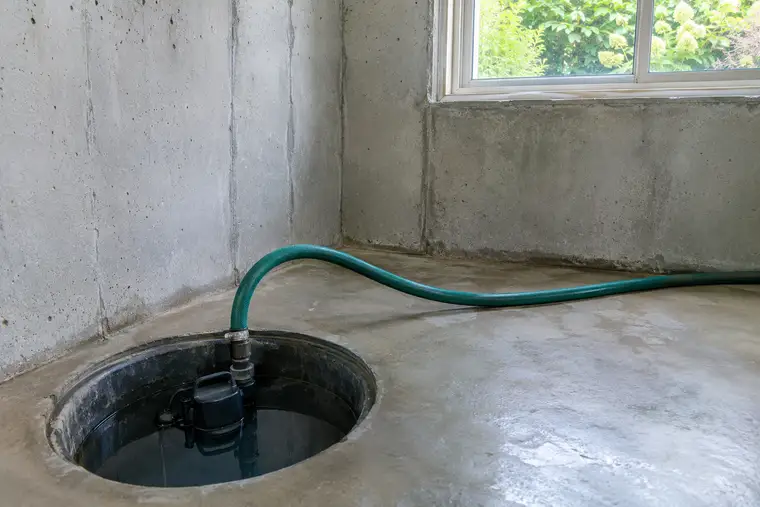
Why basement water takes so long to dry
Basements and crawl spaces hold water longer than any other part of a house.
Concrete soaks water up and gives it back slowly. The air down there is cool and still, and most homeowners rarely look. A flooded basement in Redmond can stay damp for weeks unless the water is pumped out and the space is dried on purpose.
Crawl spaces have the same problem with less room to work. Water pools on the vapor barrier, soaks the soil and rises as moisture into the joists and the subfloor of the rooms above.
How water gets into a basement or crawl space
| Where the water shows up | Usually means | How it is handled |
|---|---|---|
| A pool near the water heater or the softener | A tank or fitting is leaking | Clean water, dried in place where possible |
| A wet line along the base of the foundation walls | Saturated soil is pushing water through | Handled as dirty water |
| Water bubbling up through a floor drain | The sewer line is backing up | Full sewage precautions |
| An overflowing sump pit | The pump stopped or could not keep up | Usually handled as dirty water |
| Puddles on the crawl space plastic | A gutter, a pipe or ground water | Decided once the source is found |
If water came up through a floor drain, stop using sinks, showers, toilets and the washer until it is checked. The sewage cleanup page explains why.
When the sump pump is the problem
Many lower levels rely on a sump pump to move ground water away. When it fails, gets stuck or cannot keep up during a long storm, the pit overflows and water spreads across the slab.
- Check whether the pump has power and the outlet has not tripped.
- Look for a float that is stuck against the side of the pit.
- Make sure the discharge line outside is not blocked or frozen.
- Never reach into a pit with the pump plugged in.
A pump that never stops
A pump that runs constantly or cycles every few minutes during dry weather can point to a leak, a high water table or a problem with the check valve. It is worth having looked at before the next storm season.
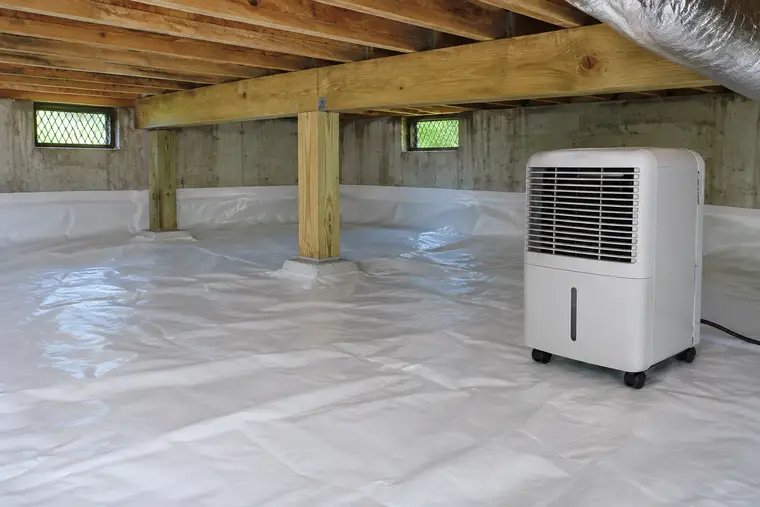
How a wet crawl space is dried
Redmond has long rainy seasons that keep crawl spaces damp for months. Add standing water, and the joists, the subfloor and the insulation above all start taking on moisture.
Pump and remove
Puddles come out, and torn or soaked plastic is pulled up.
Pull wet insulation
Insulation that has fallen or soaked through is removed.
Dry the framing
Dehumidifiers and air movers run until the joists read dry.
New vapor barrier
Fresh plastic goes down once the space is dry.
It is also the right moment to find out why the water got there, whether that is a gutter emptying next to the foundation, a leaking line or ground water.
Water damage in a finished basement
Once a lower level has carpet, walls and furniture, the water has more places to hide. Framed walls sit directly on the slab, and the wood at their base drinks water from below while the drywall draws it upward. From the room it can look like a damp patch on the carpet and nothing more.
Baseboards and drywall
The bottom of the wall is usually removed so the cavity can dry.
Carpet over concrete
It dries slowly, and the pad almost always has to be replaced.
Bedrooms and offices
These rooms get extra care because people spend long hours in them.
Readings on every wall
Readings are the only way to know which walls took on water.
Safety on the lowest level
Do not walk into basement water if the power is on and water is near outlets, cords or the panel.
Cut the breakers only when you can stand somewhere dry to do it. Otherwise wait for help. Treat any water that came from outside or a drain as contaminated, and keep children and pets away from it.
What flooded basement cleanup in Redmond, WA covers
Check safety and the source
Power, the source of the water and the type of water come first.
Remove the water
Pumps and extractors clear the slab and the crawl space.
Remove and clean
Wet finishes, carpet and insulation come out where needed, and surfaces are cleaned.
Dry and verify
Dehumidifiers run until the slab and the framing read dry.
You hear what the readings show and what needs to come out, with the reasons, before the work begins.
Questions to ask about a wet basement
- Is this clean water, ground water or a drain backup?
- Has the bottom plate of each wall taken on water?
- Does the crawl space plastic need replacing?
- What let the water in, and what would stop it next time?
- How long should the slab take to dry?
While you wait, the first hour steps cover safe moves for basements and crawl spaces.
How to keep a basement dry
Gutters and downspouts
Clear them, and carry the water well away from the foundation.
Grading
Soil should slope away from the house, not toward it.
Sump pump
Test it before the rainy season by pouring water into the pit.
Storage
Keep belongings on shelves, not on the basement floor.
A look in the crawl space after heavy rain, once or twice a year, catches most problems early.
Basement and crawl space questions
Is a damp basement floor after rain a problem?
A slab that darkens after every heavy rain is taking on ground water. It is worth finding out where it gets in, usually a gutter, the grading or a crack, before it gets worse.
Should the crawl space be sealed or vented?
It depends on how the house was built. A technician can look at the vapor barrier, the vents and the moisture readings and explain what suits yours.
Can furniture stay in the basement during drying?
Move what you can to a dry room. Anything left on the slab soaks up moisture and blocks airflow to the floor.
Why does a dehumidifier run for days in the basement?
Concrete gives up its water slowly, and lower levels are cool. Steady dehumidification is what brings the readings down.
What should I do if the sump pump keeps failing?
Have it checked before the next storm season. A worn pump, a stuck float or a blocked discharge line are common causes.
Are crawl space puddles worth worrying about?
Yes. Water under the house raises humidity in the floor above and feeds musty smells, even when you never go down there.
Can a flooded basement in Redmond affect the whole house?
A flooded basement in Redmond, WA can raise humidity upstairs and feed musty smells, so drying it fully helps the whole home.